
A harp is a musical instrument that produces sound by plucking strings stretched across its frame. Here’s a basic overview of how a harp works:
- String Vibration: The harp has multiple strings of varying lengths and thicknesses. When a harpist plucks or strums a string, it sets the string into vibration.
- Pitch Variation: The pitch (the perceived frequency of the sound) of each string is determined by factors such as its length, tension, and thickness. Longer, thicker, or more tightly stretched strings produce lower pitches, while shorter, thinner, or less tightly stretched strings produce higher pitches.
- Soundboard Amplification: The harp has a soundboard, typically made of wood, that resonates and amplifies the vibrations produced by the vibrating strings. This amplification enhances the volume and richness of the sound.
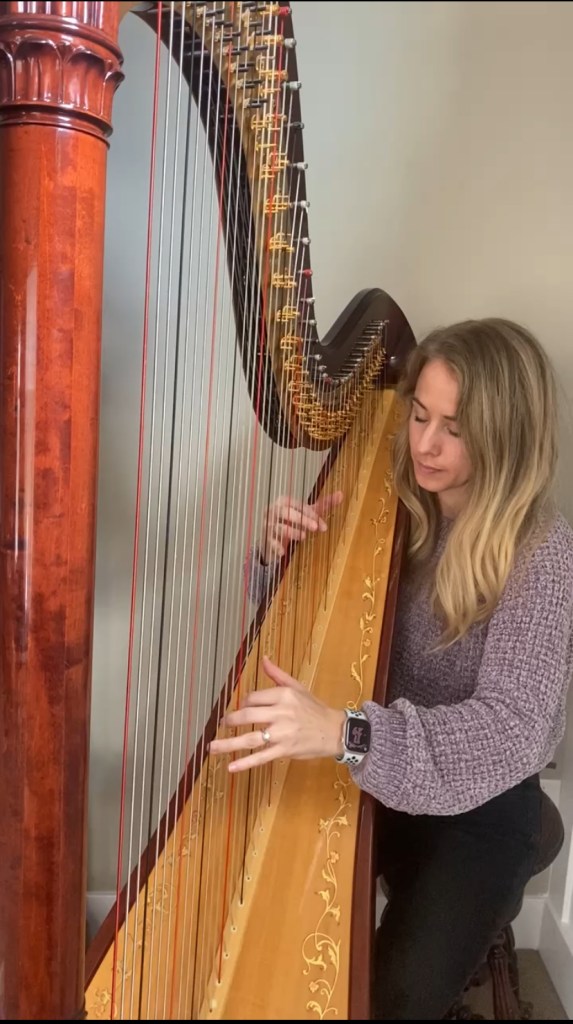
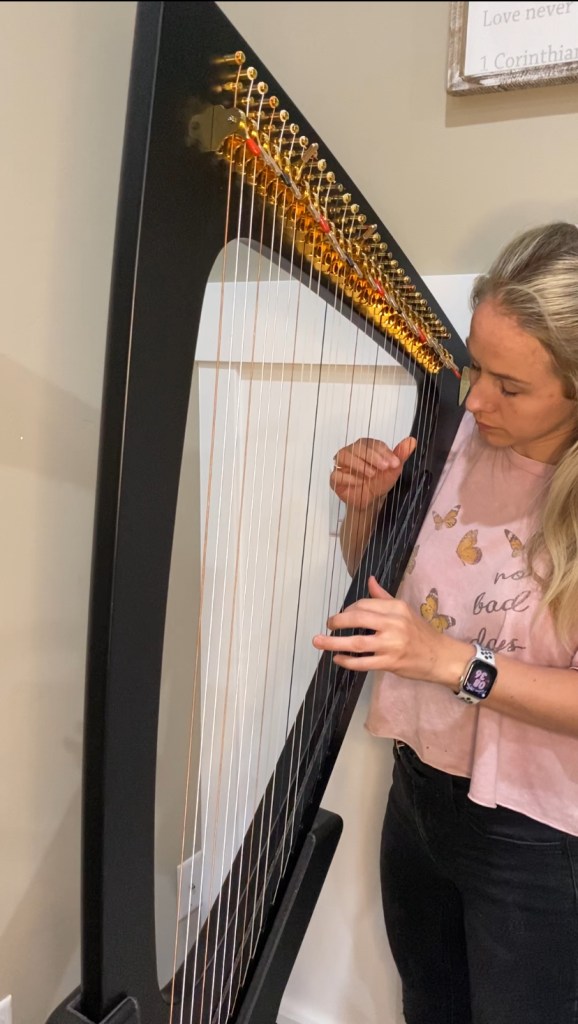

- Pedals or Levers: Some harps, especially concert or pedal harps, have mechanisms like pedals or levers that allow the harpist to change the pitch of certain strings. This enables the harp to play a wider range of musical notes and key signatures.
- Harmonics and Overtones: The harp produces harmonics and overtones, contributing to its unique and characteristic sound. These additional tones result from the complex vibrations and interactions among the various strings.
- Finger Technique: Harpists use specific finger techniques to pluck the strings, including using the pads or nails of their fingers. Different playing techniques can produce a variety of expressive sounds.
Overall, the combination of string properties, soundboard resonance, and the harpist’s technique contributes to the beautiful and distinctive music produced by the harp.
 Salt Lake Harpist